 07542 569 403
 office@akjohnbuilders.co.uk

OLDHAM, BY TRADE
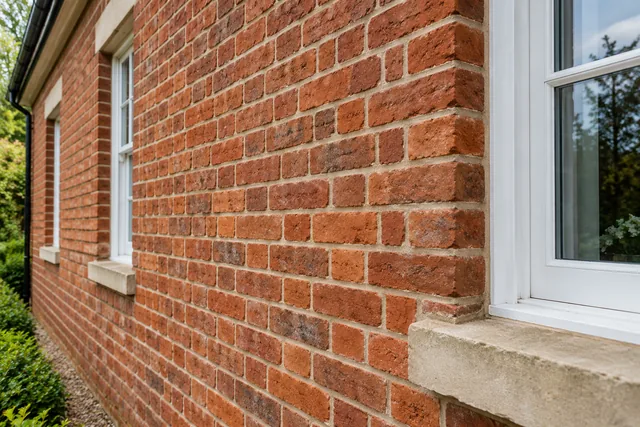
Brickwork and repointing in Oldham
The most common thing wrong with an Oldham wall is the mortar somebody else put in it. Here is how that happens and what it takes to put right.
 WhatsApp
OLDHAM
Mortar is meant to be the weak part
This is the single idea that explains most failed pointing in this town, and it is counterintuitive, so it is worth stating plainly. In a traditional wall the mortar is supposed to be weaker and softer than the stone or brick around it.
A solid wall has no cavity and no membrane. It gets wet in weather and it dries out afterwards, and it has to be able to do both. The mortar joint is the route: it is more porous than the masonry, so water that gets in moves to the joint and evaporates from there. The joint takes the wear, and a joint is a thing you can rake out and replace. The stone is not.
A lime mortar does that job and does a second one as well. It is soft enough to move very slightly as the wall moves with temperature and load, so small movements are absorbed across thousands of joints instead of being concentrated into a crack through the masonry.
Put a strong cement mortar into that wall and you reverse both functions. The joint is now harder and much less porous than the stone, so it is no longer the easiest route out for water. The wall still gets wet, and it still has to dry, so it dries through the only remaining route, which is the face of the stone itself.
What that actually does to gritstone and to soft brick
Water leaving through the face of a stone rather than through the joint carries dissolved salts with it and leaves them at the surface as it evaporates. Those salts crystallise, and crystallisation in the pores just behind the face does mechanical work. Add freezing, which this town gets more of than the lower ground around it, and water held in the face expands as it turns to ice.
The result is spalling: the outer few millimetres of the stone blowing, powdering or shelling off, usually worst on the most exposed elevation and lowest down where the wall is wettest. On gritstone it tends to show as a crumbling, sugary face. On the softer Victorian brick of the mill streets it shows as the face of the brick coming away in flakes and leaving the harder cement joints standing proud of it, which is the clearest possible sign of what has happened: the joints are the only part of the wall still in good order, and that is the wrong way round.
This is slow. It takes years, which is why the person who pointed the wall in cement is long gone by the time it shows, and it is why it keeps happening. Cement pointing looks crisp and tidy the week it goes in. The bill arrives much later and it is a bill for stone, not for mortar.
The other thing a hard joint does is crack the masonry instead of itself. Where a wall moves, a cement pointed wall has nowhere soft to absorb it, so the movement finds a line through the stones or bricks. A crack running through masonry rather than along joints on an older solid wall is very often a movement problem made visible by somebody else's mortar choice.
Diagnosis first, because not every wet wall is a pointing job
Repointing a whole elevation is a lot of work and a lot of scaffold, and it is the right answer less often than it is sold. Before anything is priced the question is what is actually making the wall wet, because there are several candidates in this town and they have different fixes.
Failed or inappropriate pointing is one, and it is common. Open joints where the mortar has simply weathered back far enough to hold water is another, and that is a genuine repointing job. A failed render coat on a rendered wall is a third, and repointing does not come into it: water gets behind a cracked render, cannot get out, and the wall stays wet indefinitely while the pointing underneath is irrelevant.
Then the ones that have nothing to do with the wall. Ground levels outside raised above the internal floor, so the wall is wet from the bottom whatever the joints are doing. A blocked or broken gutter, downpipe or gully soaking one strip of wall every time it rains, which on an exposed plot is often. A cracked or missing flashing at an abutment. A chimney stack with no effective flaunching letting water down the flue and into the breast.
Each of those presents inside as a damp patch and each is cheaper to fix than an elevation of scaffold and pointing. So the visit looks at the whole water path, from where it lands to where it leaves, and the written quote says which of these it found. Where the honest answer is that the wall does not need repointing, that is the answer given.
How it is done, and why the method matters more than the mix
Getting the mortar right is necessary and it is not sufficient. How the old joint comes out decides whether the new one lasts.
Raking out is done to a depth of roughly twice the joint width, so there is enough new mortar in the joint for it to hold rather than a thin skim sitting on top of the old material. Thin pointing over a failed joint is the commonest bodge in this trade and it falls out within a few years.
On stone, and on soft brick, the raking out is done by hand with the right tools rather than with an angle grinder run down the joint. A disc in a joint that is not perfectly straight, which on random coursed gritstone it never is, will cut into the arris of the stones either side and leave two permanent scars that no pointing afterwards will hide. That damage is the main reason some repointed stone houses look wrong even when the mortar is correct: the joints have been widened and squared by the tool rather than followed.
The mix is matched to the wall rather than to a bag. On an older solid stone or soft brick wall that means a lime based mortar, with the sand chosen for colour and grading so the finished joint looks like the building rather than like a repair. Lime needs protecting while it cures and it will not be rushed, particularly in cold or very dry weather, so the time of year is part of the conversation rather than an inconvenience.
The finish is kept flush or slightly recessed to follow the face of the masonry. A raised or weatherstruck joint standing proud of the stone sheds water onto the face of it, which is the opposite of what the wall wants, and on a stone building it looks like a repair from the far side of the street.
Chimneys, parapets and the bits nobody looks at
The highest and most exposed masonry on the house is also the oldest to have been touched, and in this town it takes the worst of the weather from all sides at once.
Chimney stacks are usually the worst masonry on an Oldham house. They are wet from every direction, they have sulphates coming through from the flue where the stack has served a solid fuel fire, and sulphate attack on cement mortar makes it expand, which is what tilts a stack and opens its joints. A stack that has been cement pointed and then suffered sulphate attack can be in genuinely poor condition while the house below it looks fine.
Flaunching, the mortar bed the pots sit in, cracks and lets water straight down the stack, and it is a small job that prevents a large one. Parapets and copings on the mill street terraces are the same story: a coping with open joints is a funnel into the top of a solid wall, and the damp shows up a floor below where nobody connects it to the roofline.
Where the work is on a stack or at roof level there is access to arrange and it is priced as its own stage, because scaffold to a chimney on a terrace with no side access is a significant part of the cost of a small piece of masonry.
IN THE QUOTE
What a pointing quote in Oldham covers
 What is actually making the wall wet, named, before any pointing is priced
- Which elevations need doing and which honestly do not
- Raking out by hand on stone and soft brick, to a proper depth
- A lime based mortar matched to the wall, with the sand chosen for colour
- A flush or slightly recessed finish that follows the face of the masonry
- Chimney, flaunching, coping and rainwater checks while the access is up
- Access priced as its own stage, and what is excluded

Most of the cost of a pointing job is scaffold and labour, so the valuable part of the quote is the part that says which walls do not need it.
THREE WAYS TO START
Talk to us about your Oldham job
Whichever is easiest. You get the same answer from all three.

Or send it in a minute
Three boxes and a photo if you have one.
PAST WORK
Recent work
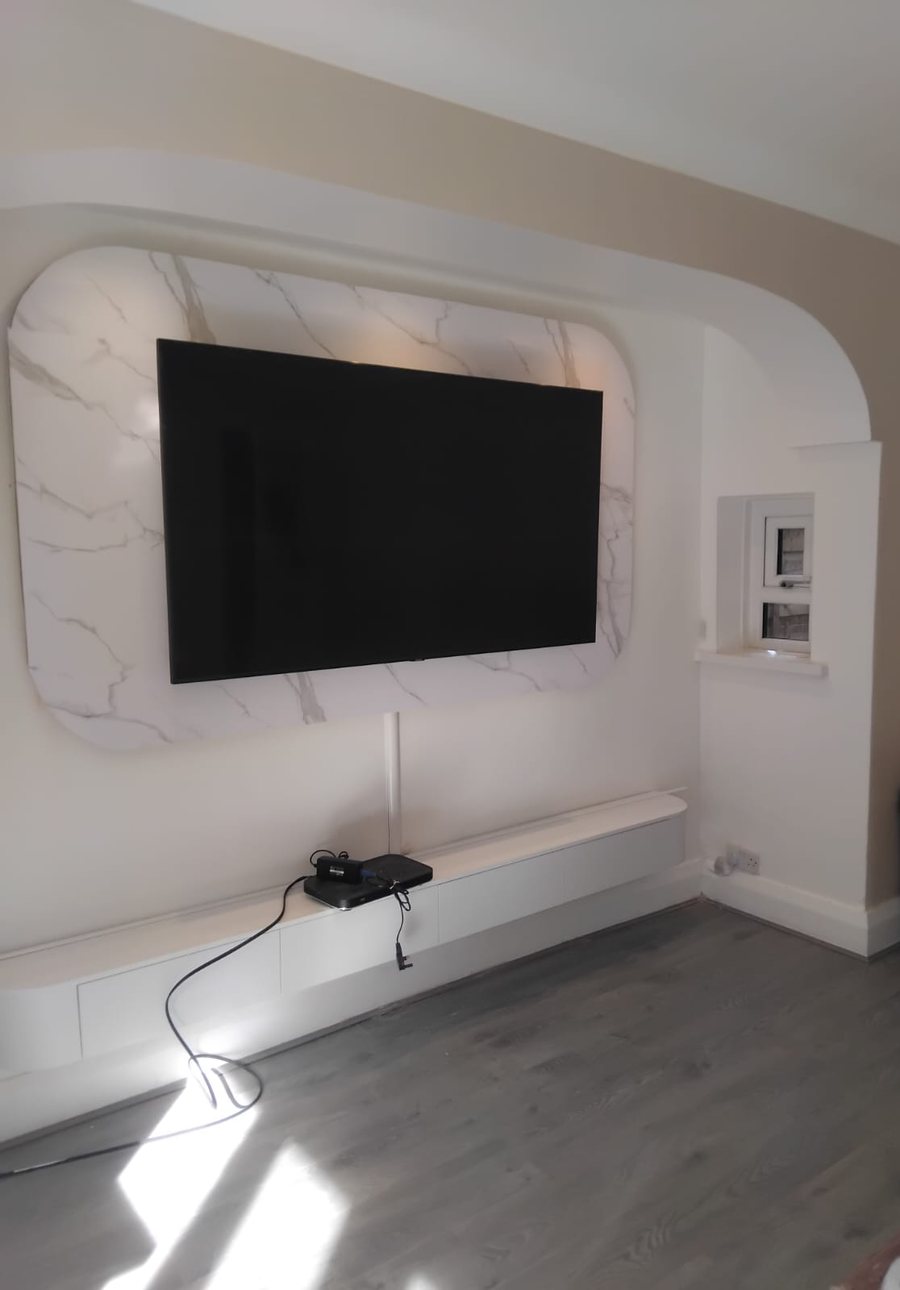
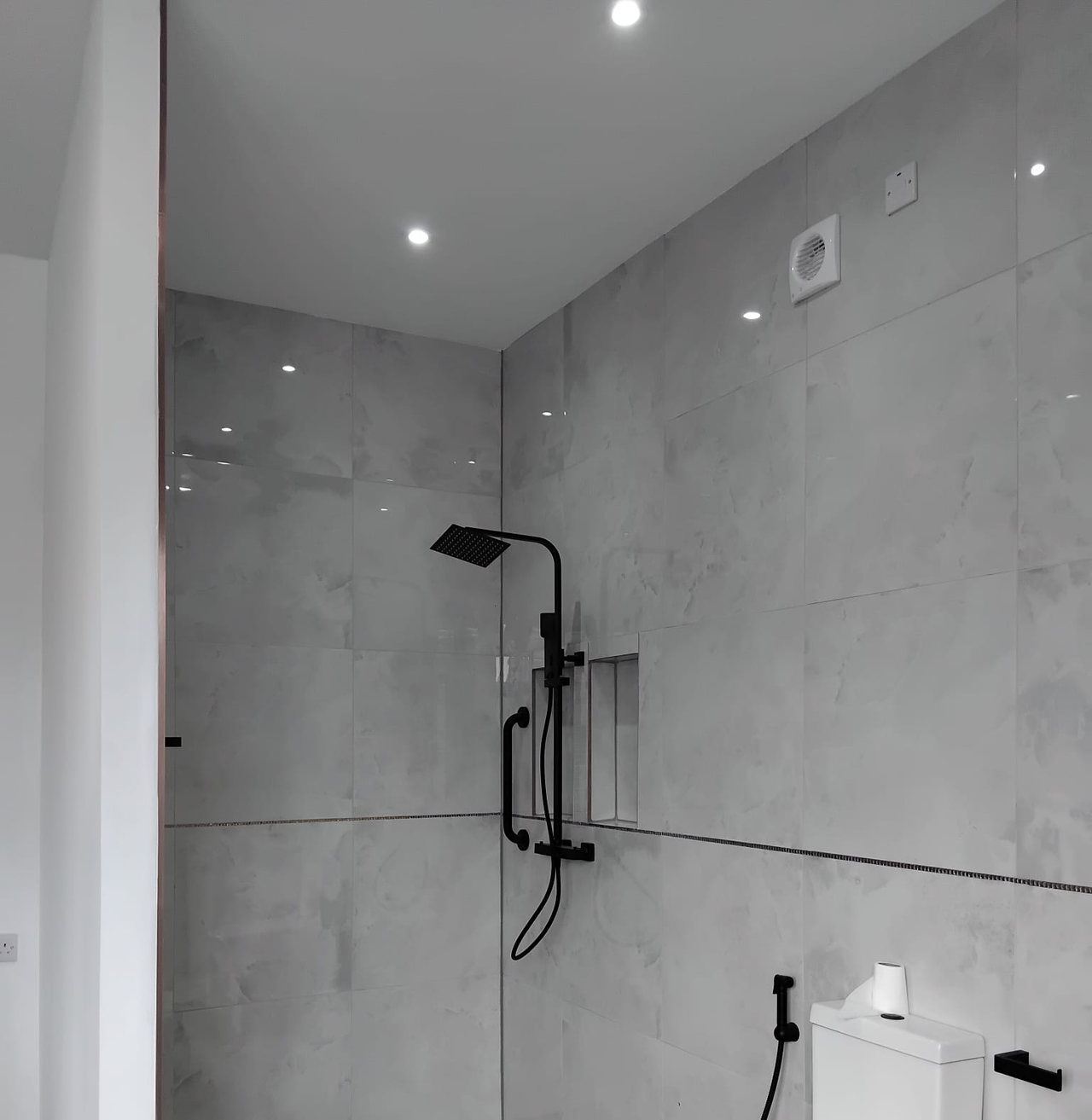
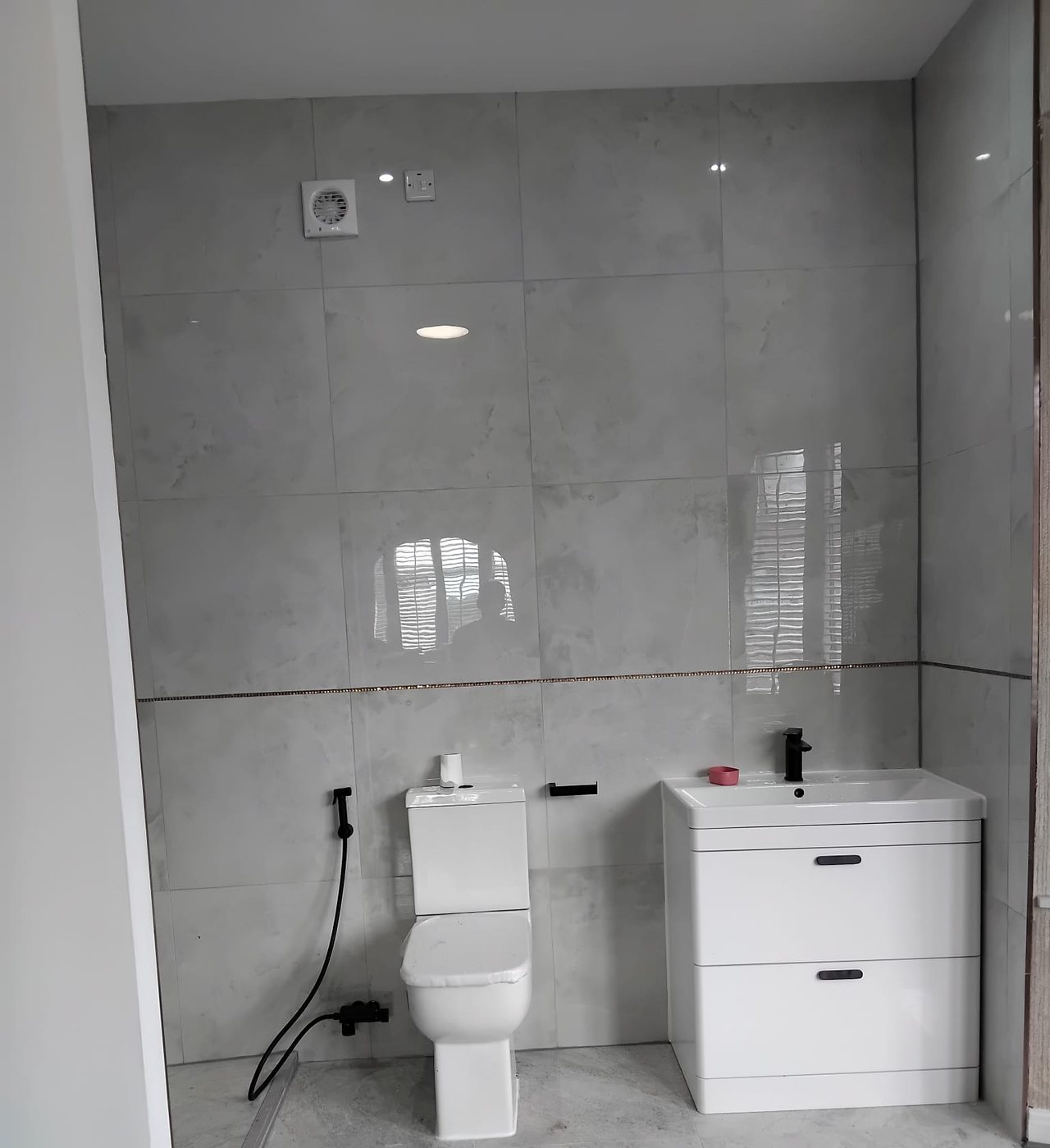
Finished jobs, photographed on site.
Call us for a quote in Oldham
A written quote, itemised, with no obligation.
USEFUL TO KNOW
Pointing in Oldham: the questions that come up
Somebody pointed our stone house in cement. Is that a problem?
It is the most common thing we are called to here. A cement joint is harder and less porous than the stone, so the wall dries through the face of the stone instead of through the joint, and the face spalls. If the joints are standing proud of crumbling stone or flaking brick, that is what is happening.
Can you just point over the top of the old mortar?
No, and anybody offering to is selling you the same job twice. The joint is raked out to about twice its width so there is enough new mortar in there to hold. A thin skim over a failed joint falls out in a few years.
Do you use a grinder to take the old pointing out?
Not on stone or soft brick. Random coursed gritstone has no straight joints to follow, so a disc cuts into the edges of the stones either side and leaves permanent scars that no pointing will hide afterwards. It comes out by hand with the right tools.
Does the whole house need doing?
Often not. Exposure is not even across a building, so the elevation facing the weather can be failed while a sheltered one is sound. The quote says which walls need it and which do not, because most of the cost is access and labour and there is no sense paying it for a wall that is fine.
Our wall is damp inside. Will repointing fix it?
Sometimes, and sometimes it is not the wall at all. Raised ground levels outside, a blocked gutter or downpipe soaking one strip, a cracked render, a missing flashing or a chimney with no flaunching all show up inside as a damp patch and all cost less to fix than an elevation of pointing. That gets checked first.
 Brickwork and repointing
GET A PRICE
Tell us about your job
Three boxes and a photo if you have one. We price it in writing, with no obligation.
Where we work from
Based in Oldham, covering Greater Manchester.
 07542 569 403
 office@akjohnbuilders.co.uk
 Oldham, Greater Manchester